Please wait while we open this resource.


K

Clinical reviews
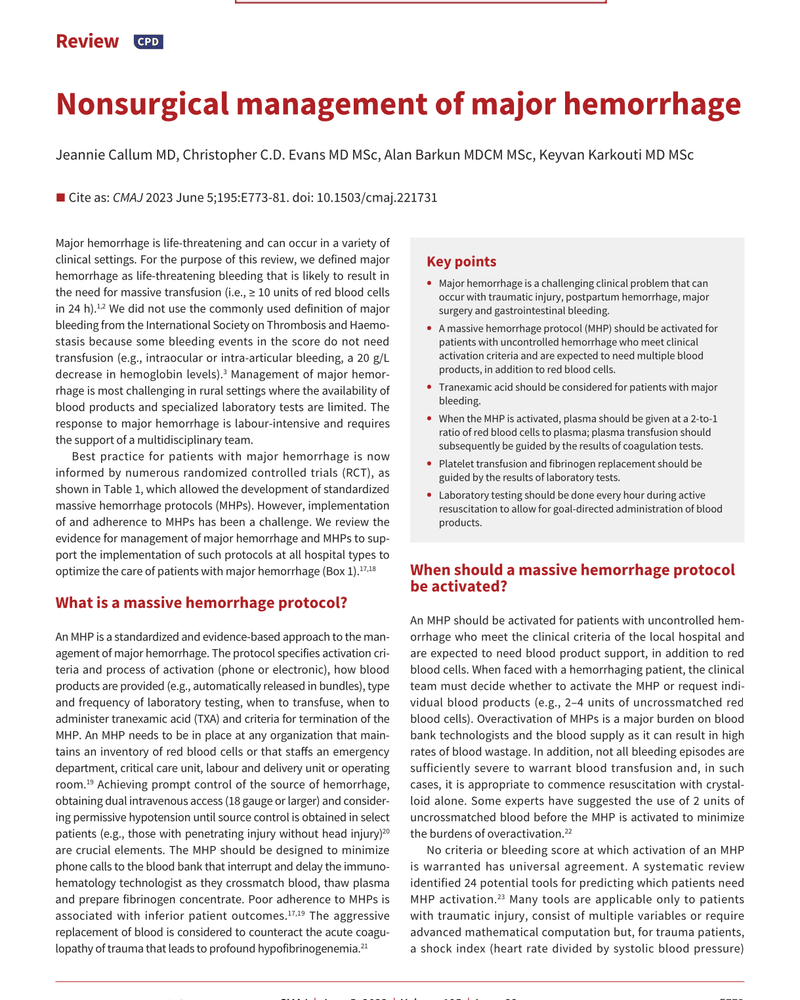
NONSURGICAL MANAGEMENT OF MAJOR HEMORRHAGE
Kingston Health Sciences Centre, Queen's University; Kingston Health Sciences Centre; McGill University; Toronto General Hospital, University of Toronto
PDF20239 pages134 KB
Major hemorrhage is a critical condition that can arise in various clinical scenarios, necessitating a coordinated response from a multidisciplinary team. The document emphasizes the importance of standardized protocols to optimize patient care and discusses the evidence from randomized controlled trials that inform best practices. It also highlights the challenges in implementing these protocols, particularly in rural settings where resources may be limited.
Sign in to open
Ask this resource
Answers use this document only.
Your first question is free.
More like this
Resources from the same specialty and type. Curated links will replace these when added.
Clinical Resources
Documents that extend or complement this resource.
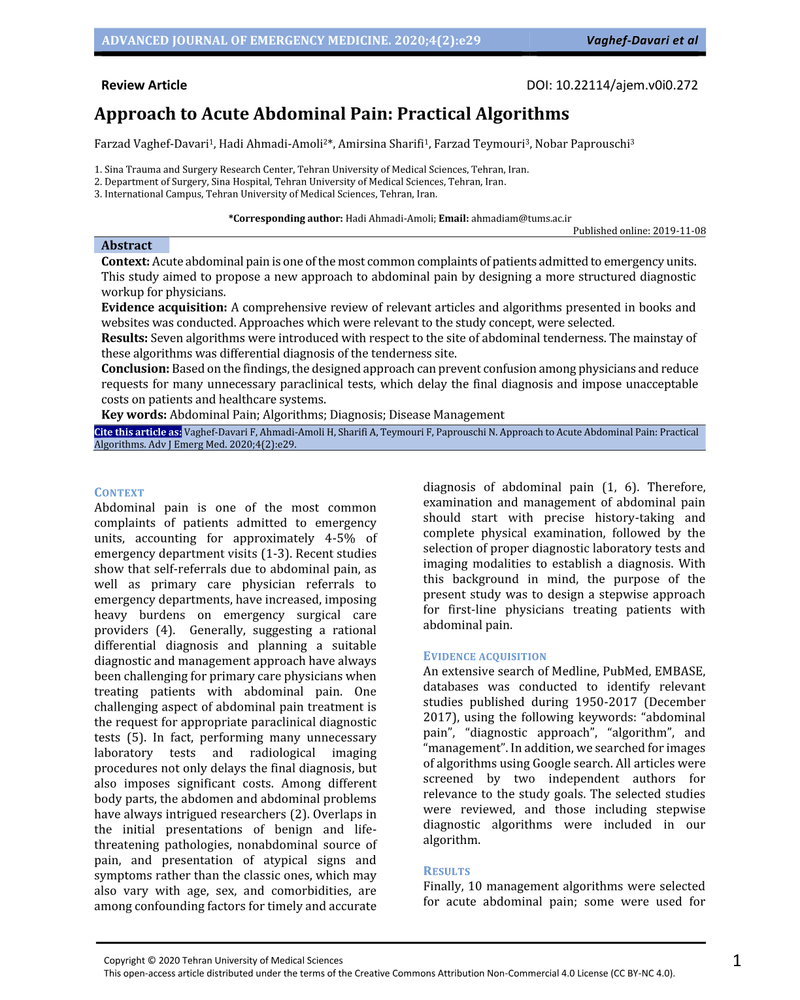
Approach to Acute Abdominal Pain: Practical Algorithms
Same clinical topic · Emergency Medicine
TREATMENT AND MONITORING
Same clinical topic · Emergency Medicine
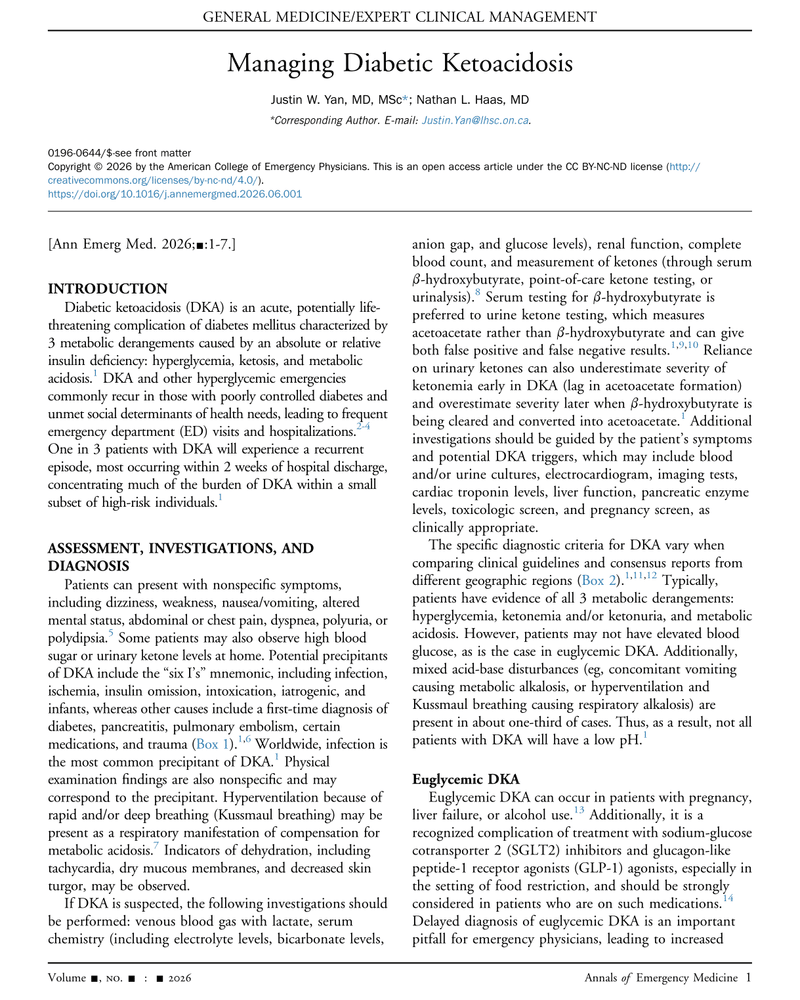
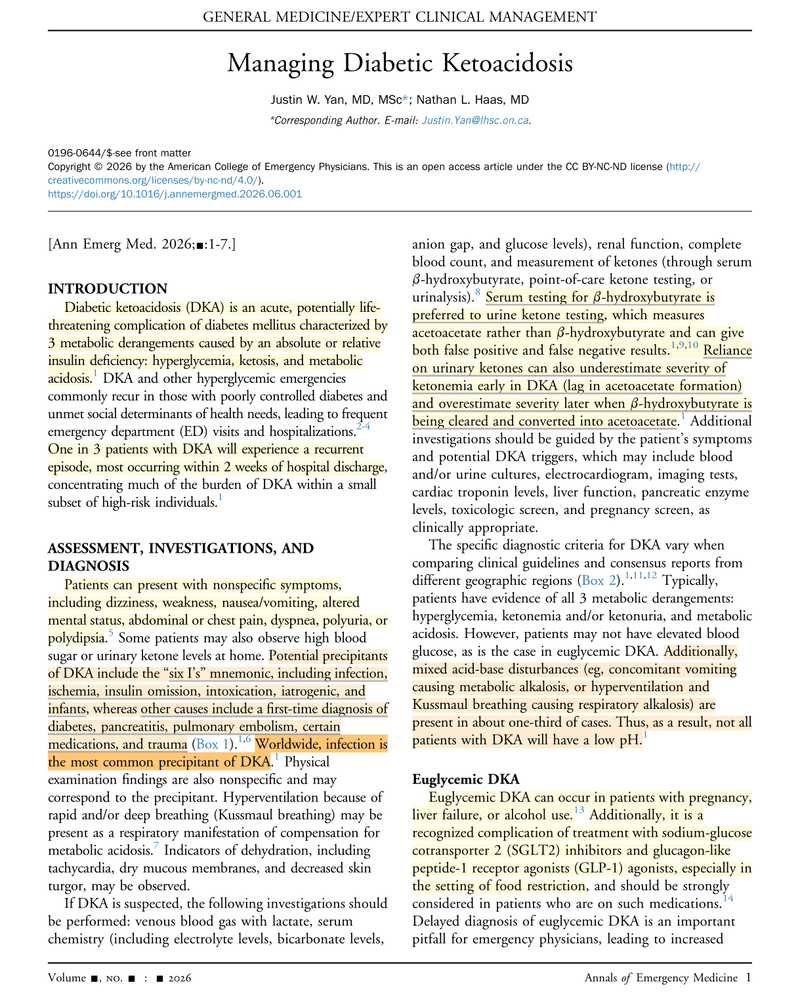
Managing Diabetic Ketoacidosis
Same clinical topic · Emergency Medicine
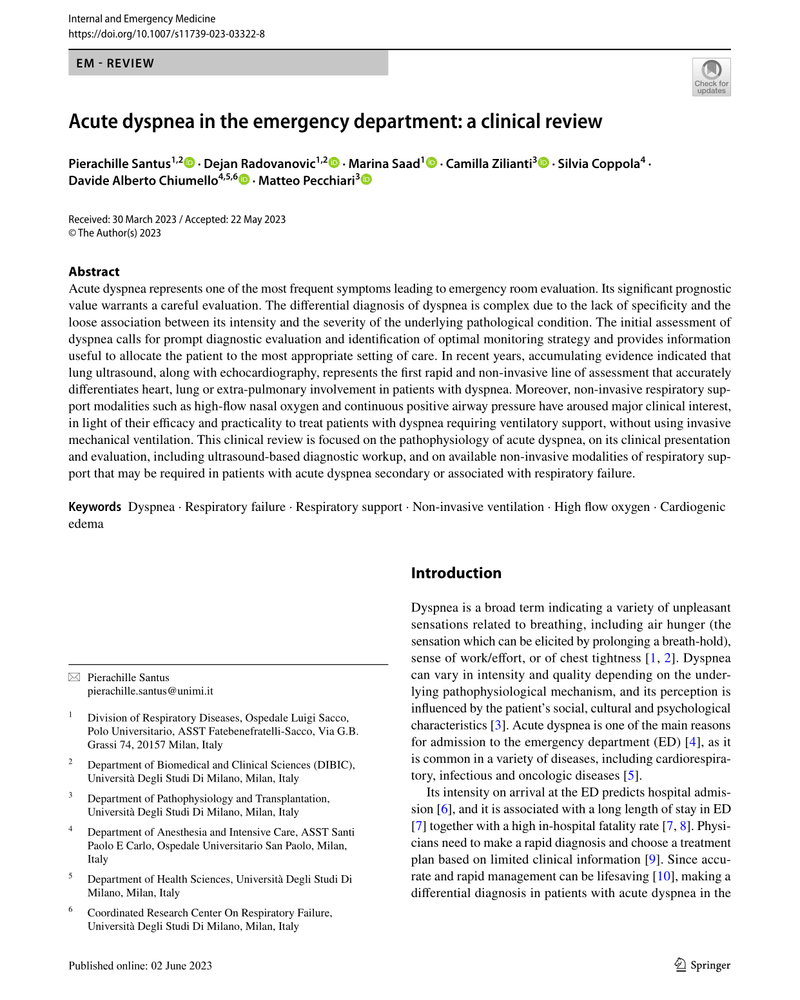
ACUTE DYSPNEA IN THE EMERGENCY DEPARTMENT: A CLINICAL REVIEW
Same clinical topic · Emergency Medicine
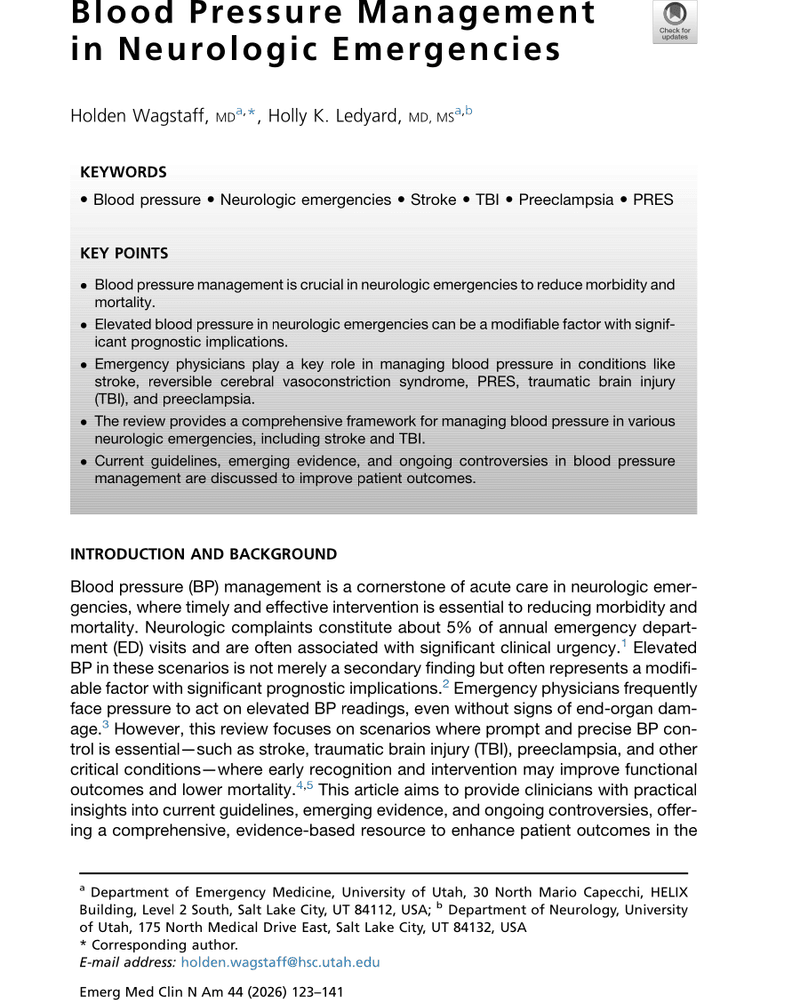
BLOOD PRESSURE MANAGEMENT IN NEUROLOGIC EMERGENCIES
Same clinical topic · Emergency Medicine
BLOOD PRESSURE MANAGEMENT IN NEUROLOGIC EMERGENCIES
Same clinical topic · Emergency Medicine
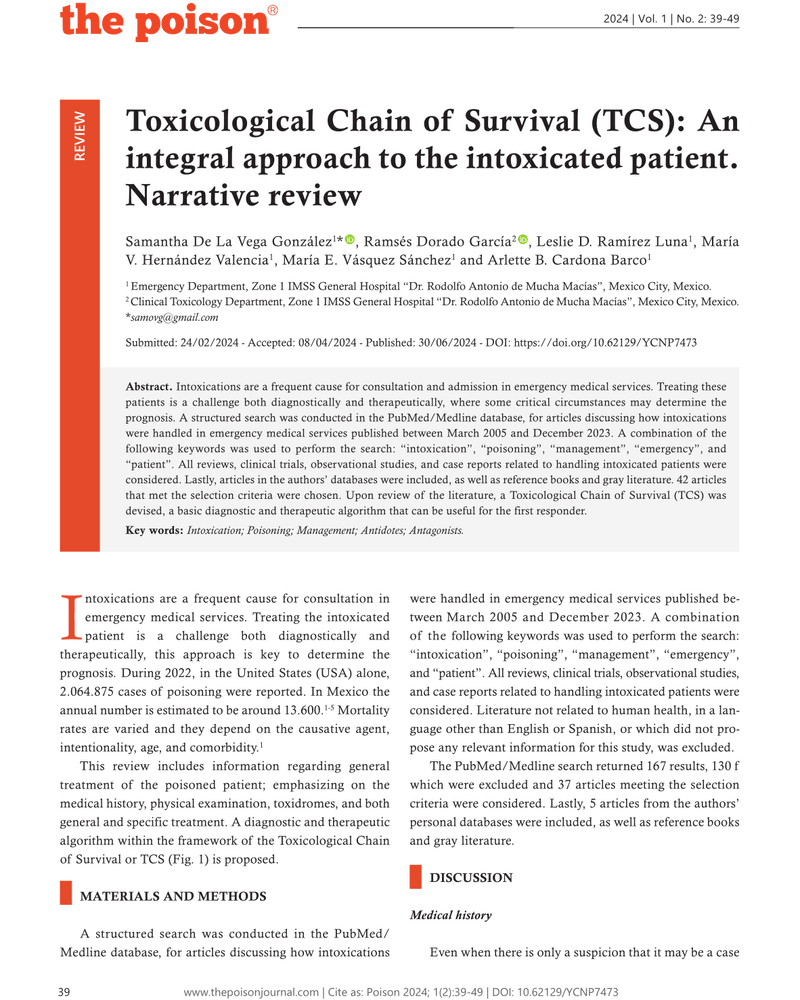
TOXICOLOGICAL CHAIN OF SURVIVAL (TCS): AN INTEGRAL APPROACH TO THE INTOXICATED PATIENT. NARRATIVE REVIEW
Same clinical topic · Emergency Medicine
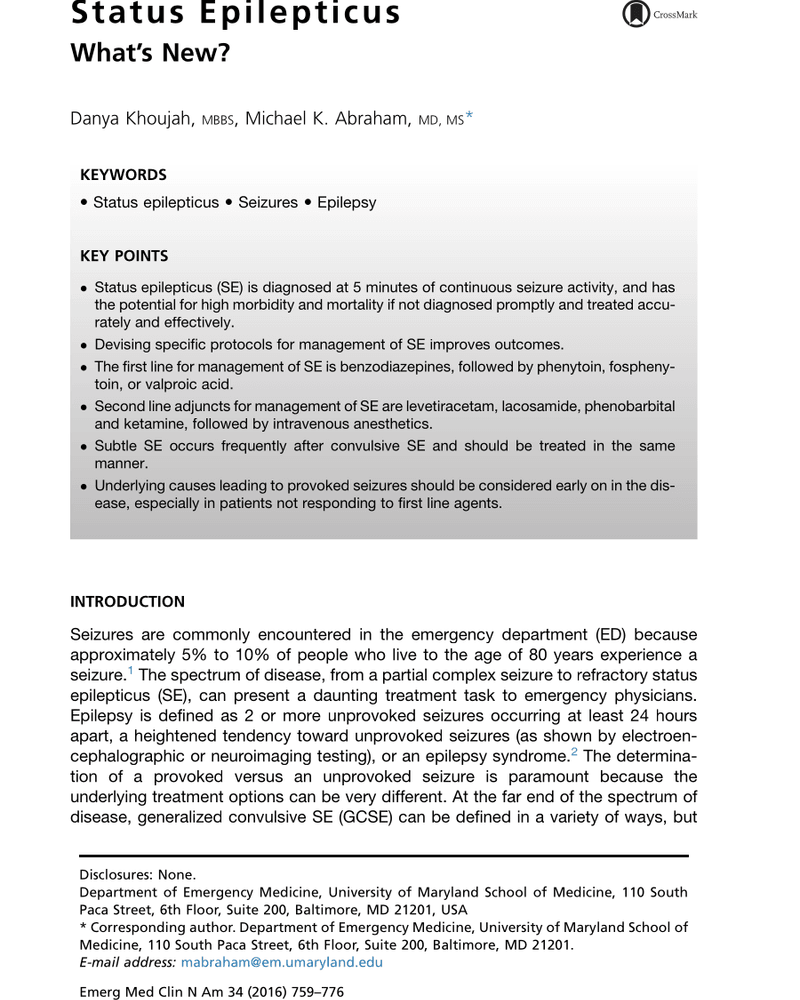
FAILURES IN THE MANAGEMENT OF STATUS EPILEPTICUS
Same clinical topic · Emergency Medicine
A Review of Bicarbonate Use in Common Clinical Scenarios
Same clinical topic · Emergency Medicine