Please wait while we open this resource.


K


Clinical notes
Tests of Ventilatory Capacity
Jehu Iputo
PPTX9 pages2.1 MB
The document outlines the measurement of forced expiratory volume (FEV1) and forced vital capacity (FVC) and describes how to interpret normal, obstructive, and restrictive patterns on forced expiration. It details the calculation of forced expiratory flow (FEF25–75%) and the use of expiratory flow–volume curves. Diagrams illustrate dynamic airway compression during forced expiration and the changes in PO₂ along the pulmonary capillary. The material also covers gas exchange during hypoventilation and lists causes of hypoventilation.
Sign in to open
Ask this resource
Answers use this document only.
Your first question is free.
More like this
Resources from the same specialty and type. Curated links will replace these when added.
Clinical Resources
Documents that extend or complement this resource.

CHRONIC OBSTRUCTIVE PULMONARY DISEASE
Same clinical topic · Pulmonology

PNEUMONIA
Same clinical topic · Pulmonology

DISEASES OF THE PLEURA
Same clinical topic · Pulmonology
TB, HIV and Pulmonary co-morbidities 30march2014
Same clinical topic · Pulmonology
PULMONARY MKSAP 19 BOARDBASICS
Same clinical topic · Pulmonology

RESPIRATORY TRACT INFECTIONS, LOWER
Same clinical topic · Pulmonology

CHAPTER 77: ASTHMA
Same clinical topic · Pulmonology
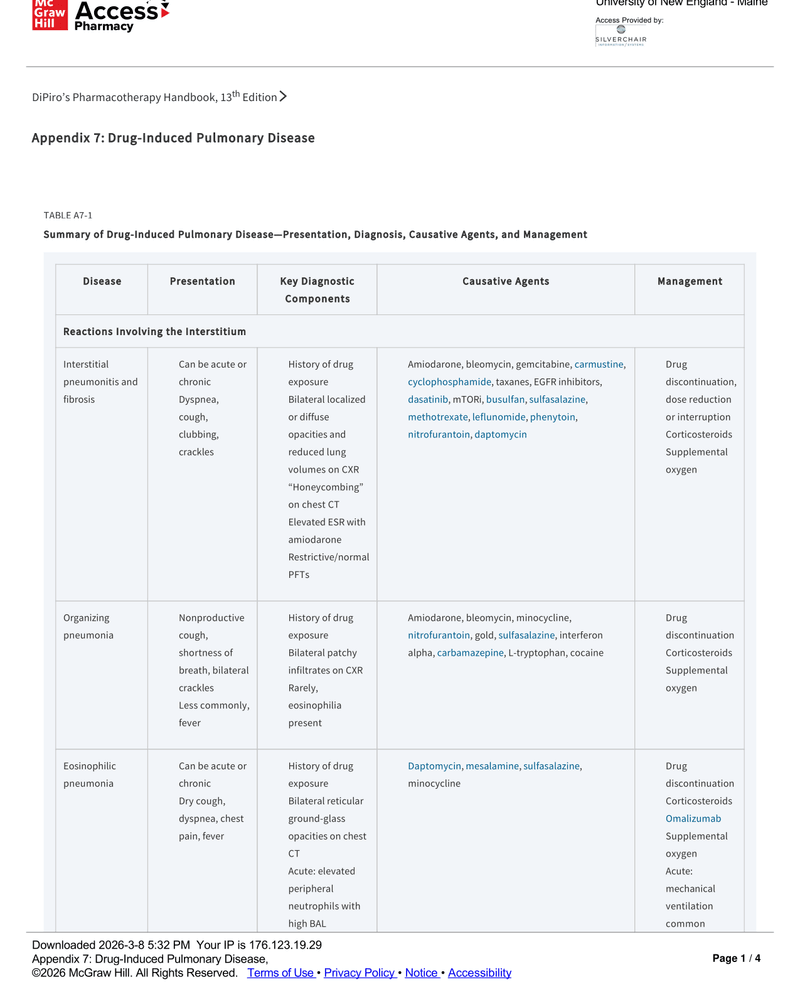
APPENDIX 7: DRUG-INDUCED PULMONARY DISEASE
Same clinical topic · Pulmonology

CHRONIC ASTHMA TREATMENT: COMMON QUESTIONS AND ANSWERS
Same clinical topic · Pulmonology