Preparing your experience, please wait…


K

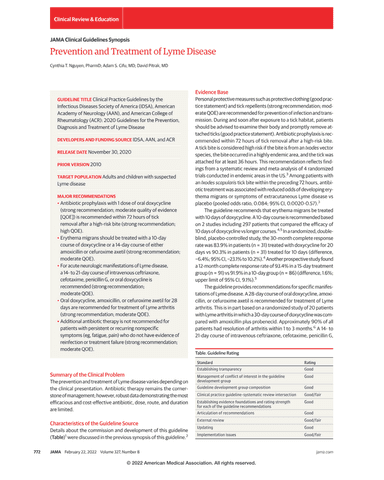
Guidelines & protocols
PREVENTION AND TREATMENT OF LYME DISEASE
Cynthia T. Nguyen, PharmD; Adam S. Cifu, MD; David Pitrak, MD
PDF20222 pages82 KB
The prevention and treatment of Lyme disease varies depending on the clinical presentation. Antibiotic therapy remains the cornerstone of management; however, robust data demonstrating the most efficacious and cost-effective antibiotic, dose, route, and duration are limited. The guideline recommends personal protective measures and timely antibiotic prophylaxis after high-risk tick bites. It also addresses treatment protocols for erythema migrans and Lyme neuroborreliosis, highlighting the need for careful consideration of antibiotic use to avoid overprescribing.
No account needed
Ask this resource
Answers from this document onlyMore like this
Resources from the same specialty and type. Curated links will replace these when added.
Clinical Resources
Documents that extend or complement this resource.
TB Guidelines
Same clinical topic · Infectious Diseases
2026 WHO Malaria Guideline
Same clinical topic · Infectious Diseases

Consolidated Guidelines for the Prevention and Treatment of HIV and AIDS in Uganda
Same clinical topic · Infectious Diseases
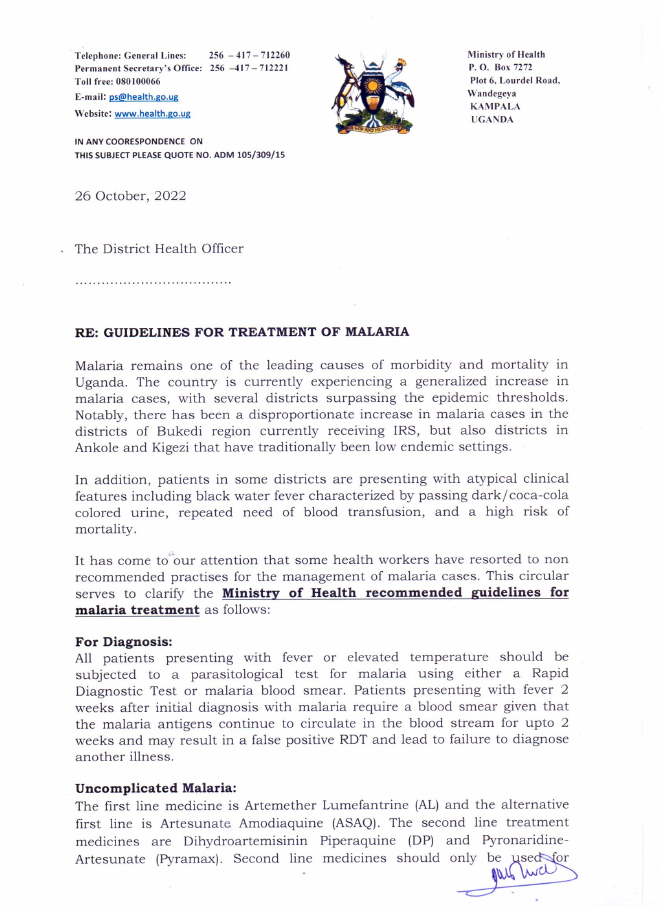
Updated Malaria Treatment Guidelines
Same clinical topic · Infectious Diseases
Guidelines for the management of asymptomatic sexually transmitted infections
Same clinical topic · Infectious Diseases
Uganda National TB and Leprosy Control Programme Manual
Same clinical topic · Infectious Diseases
National Antiretroviral Treatment Guidelines
Same clinical topic · Infectious Diseases
Uganda Malaria Control Program Guidelines 2022
Same clinical topic · Infectious Diseases
Management of severe malaria: a practical handbook
Same clinical topic · Infectious Diseases