Please wait while we open this resource.


K

Clinical reviews
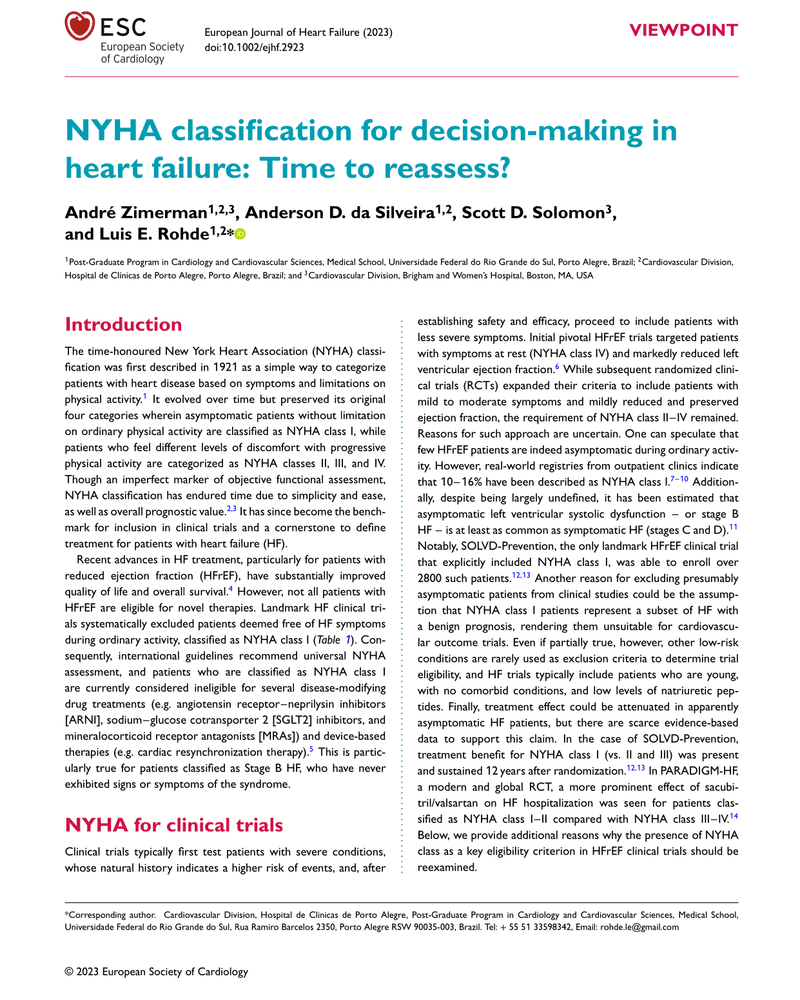
NYHA CLASSIFICATION FOR DECISION-MAKING IN HEART FAILURE: TIME TO REASSESS?
Post-Graduate Program in Cardiology and Cardiovascular Sciences, Medical School, Universidade Federal do Rio Grande do Sul; Cardiovascular Division, Hospital de Clínicas de Porto Alegre; Cardiovascular Division, Brigham and Women's Hospital
PDF4 pages657 KB
The NYHA classification, established in 1921, categorizes heart failure patients into four classes based on their symptoms and limitations during physical activity. Despite its simplicity and prognostic value, recent advancements in heart failure treatment have raised questions about the classification's effectiveness, particularly for patients with reduced ejection fraction. The document explores the limitations of the NYHA classification in clinical trials and suggests that patient-reported outcomes may provide a more accurate assessment of health status.
Sign in to open
Ask this resource
Answers use this document only.
Your first question is free.
More like this
Resources from the same specialty and type. Curated links will replace these when added.
Clinical Resources
Documents that extend or complement this resource.
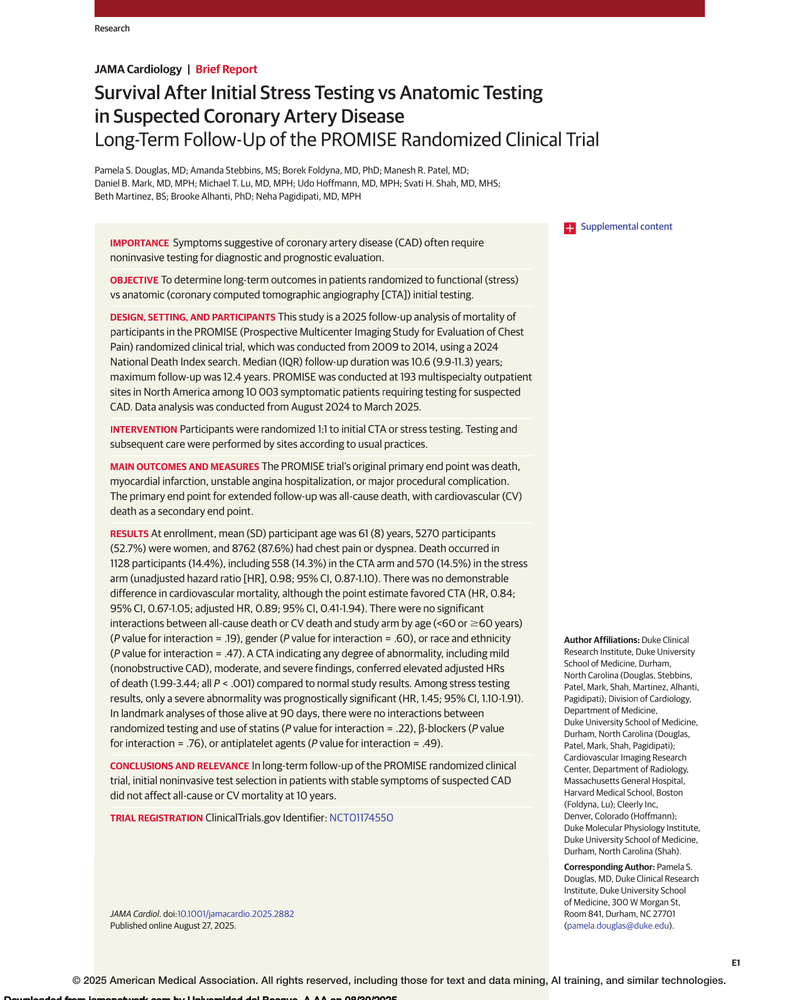
SURVIVAL AFTER INITIAL STRESS TESTING VS ANATOMIC TESTING IN SUSPECTED CORONARY ARTERY DISEASE
Same clinical topic · Cardiology
PRACTICAL CARDIO-ONCOLOGY
Same clinical topic · Cardiology
OXFORD CARDIOLOGY LIBRARY: Hypertension
Same clinical topic · Cardiology
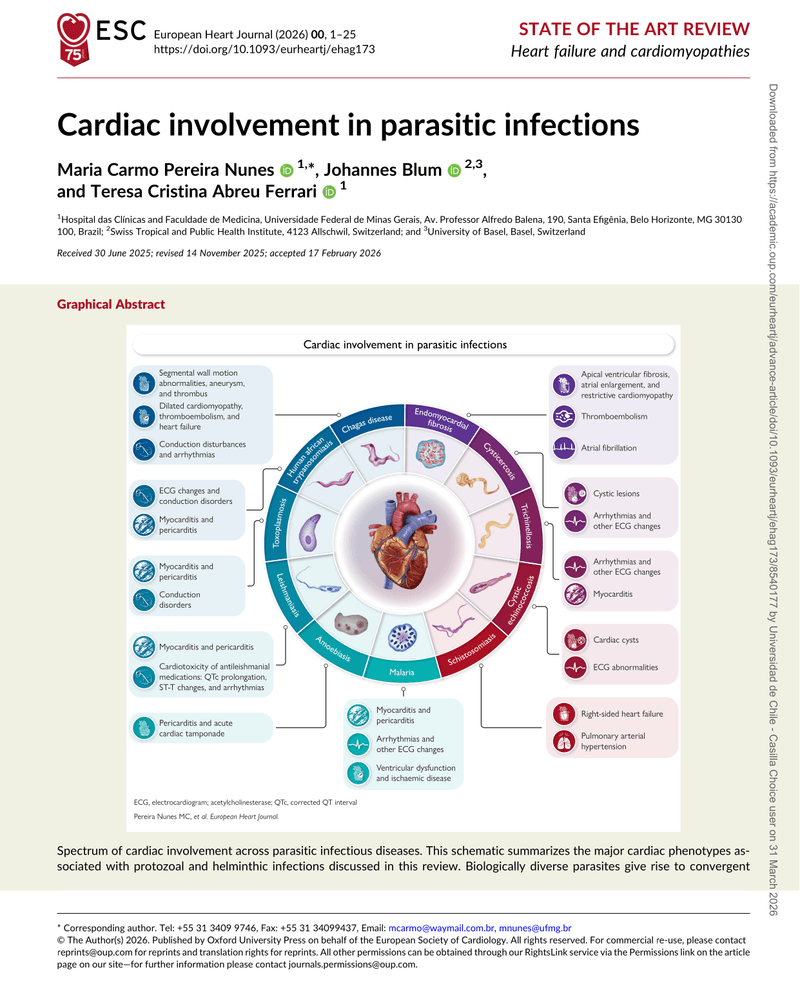
CARDIAC INVOLVEMENT IN PARASITIC INFECTIONS
Same clinical topic · Cardiology

The Athlete’s ECG
Same clinical topic · Cardiology
Antigen carbohydrate 125 as a biomarker in heart failure: a narrative review
Same clinical topic · Cardiology
Current ECG Aspects of Interatrial Block
Same clinical topic · Cardiology
Arrhythmic mitral valve prolapse in 2023: Evidence-based update
Same clinical topic · Cardiology
INTERPRETING THE NORMAL PACEMAKER
Same clinical topic · Cardiology