Please wait while we open this resource.


K

Clinical reviews
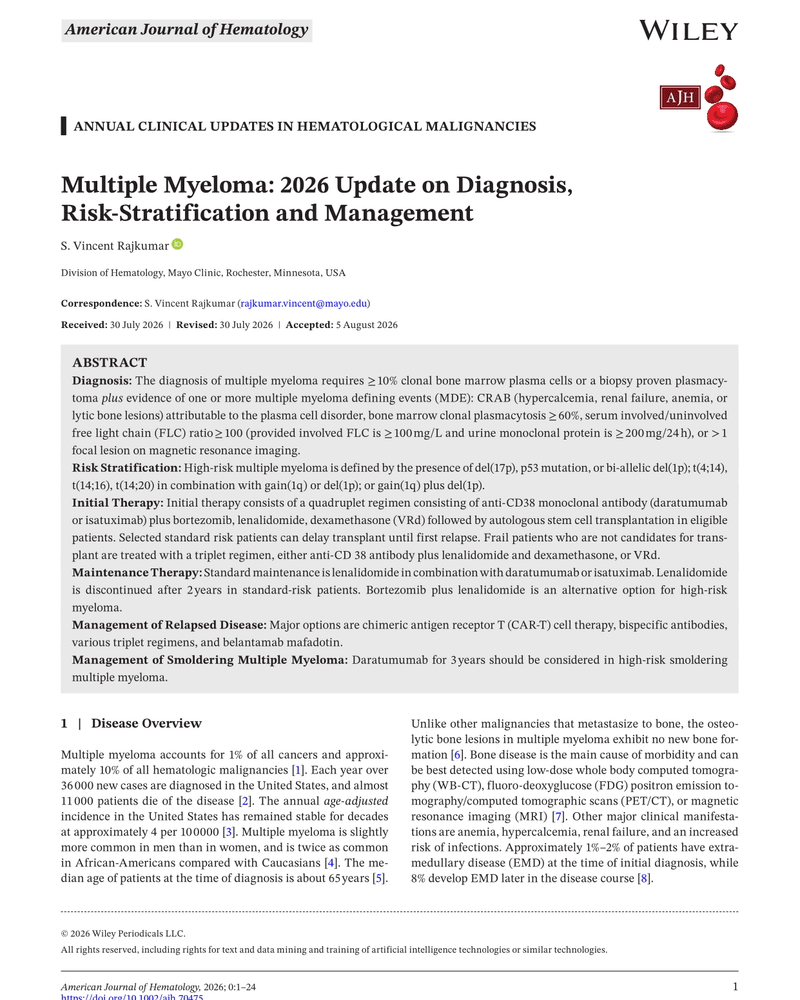
MULTIPLE MYELOMA: 2026 UPDATE ON DIAGNOSIS, RISK-STRATIFICATION AND MANAGEMENT
Mayo Clinic
PDF202624 pages504 KB
The update discusses the criteria for diagnosing multiple myeloma, including the necessary presence of clonal bone marrow plasma cells and defining events. It also outlines the risk stratification for high-risk multiple myeloma based on genetic markers. The document details initial therapy options, including a quadruplet regimen for eligible patients and alternative treatments for frail patients. Maintenance therapy recommendations are also provided, emphasizing the role of lenalidomide and monoclonal antibodies.
Sign in to open
Ask this resource
Answers use this document only.
Your first question is free.
More like this
Resources from the same specialty and type. Curated links will replace these when added.
Clinical Resources
Documents that extend or complement this resource.
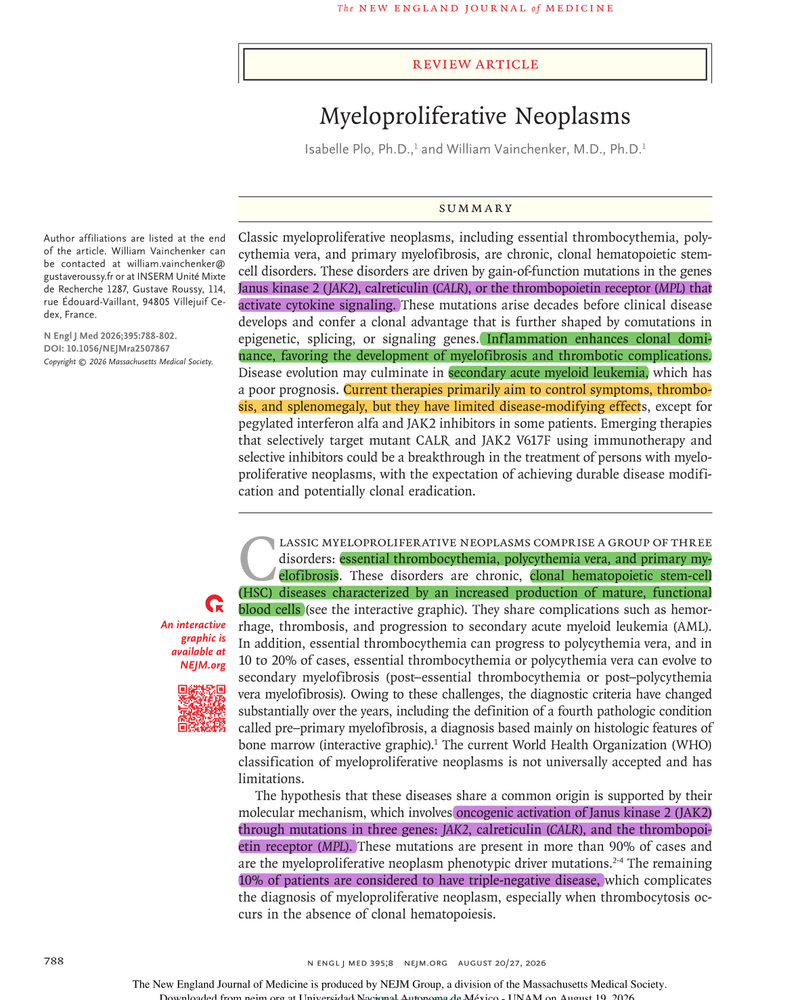
Myeloproliferative Neoplasms
Same clinical topic · Hematology
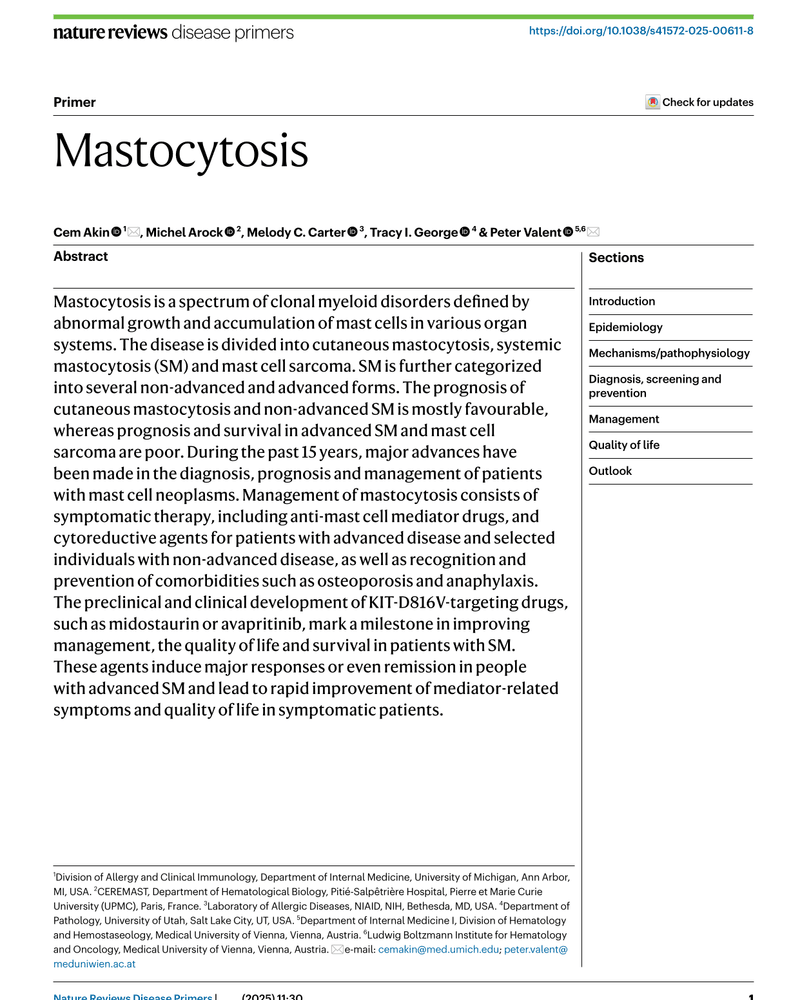
MASTOCYTOSIS
Same clinical topic · Hematology
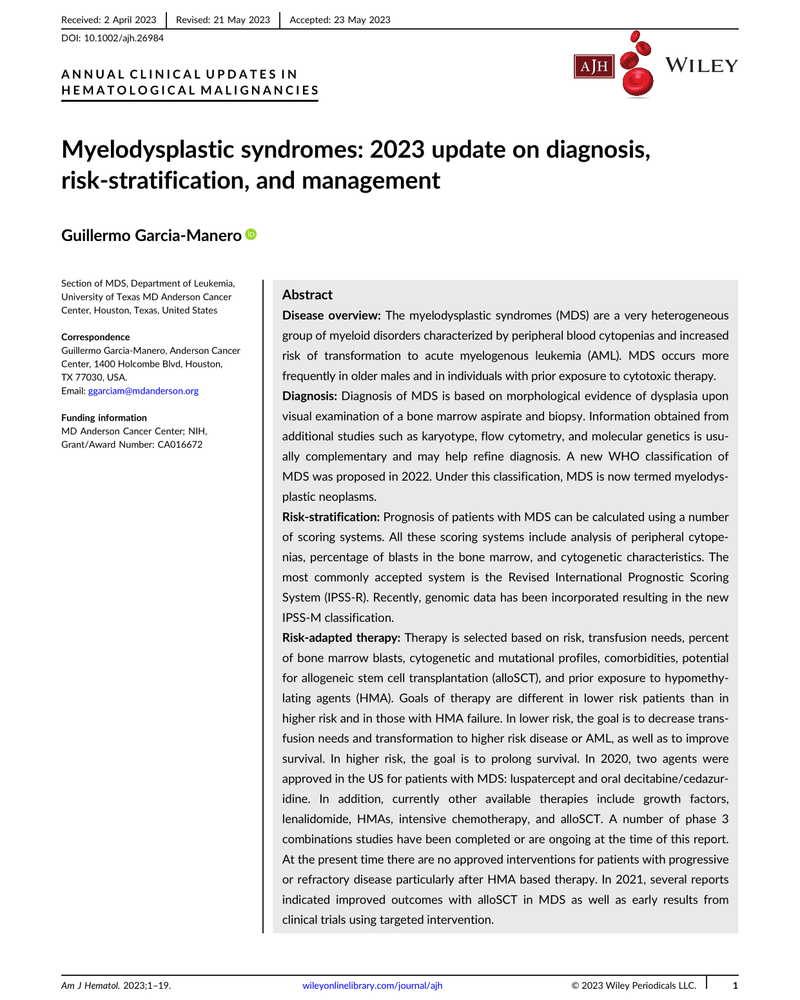
MYELODYSPLASTIC SYNDROMES: 2023 UPDATE ON DIAGNOSIS, RISK-STRATIFICATION, AND MANAGEMENT
Same clinical topic · Hematology
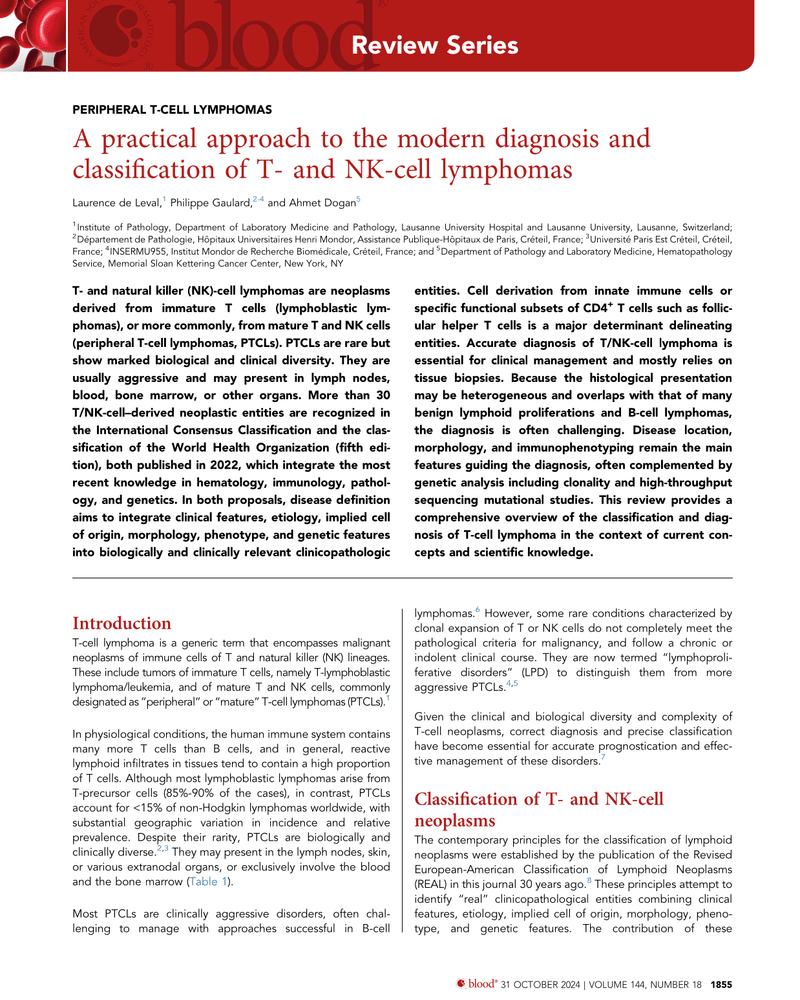
PERIPHERAL T-CELL LYMPHOMAS
Same clinical topic · Hematology
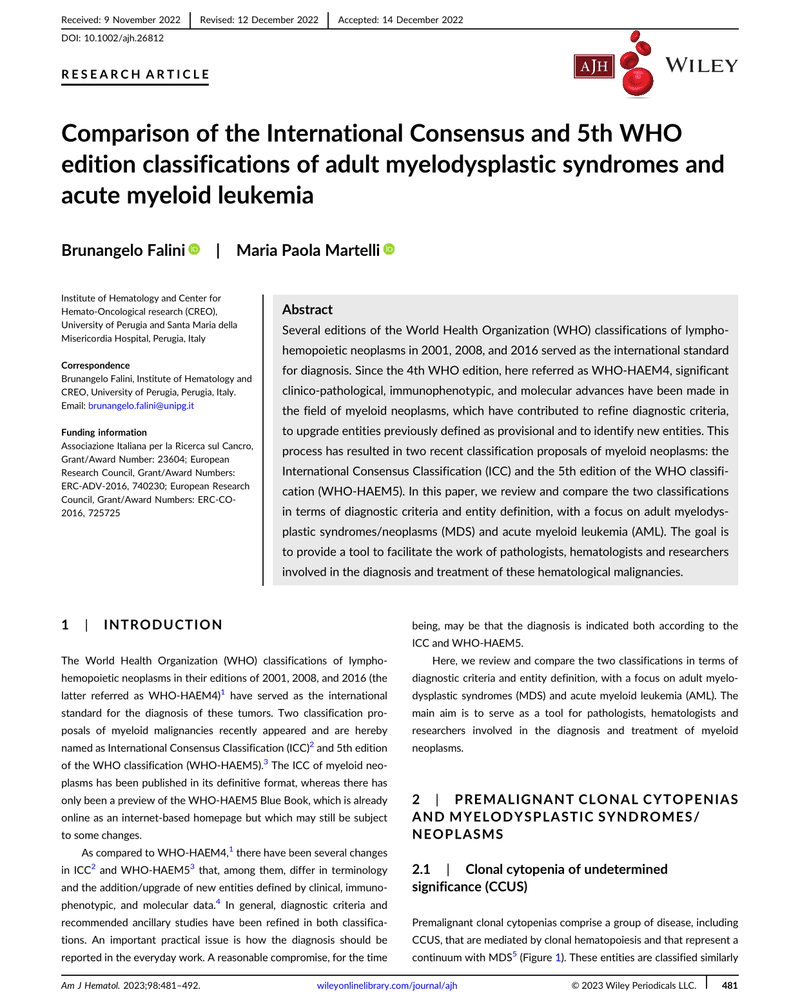
COMPARISON OF THE INTERNATIONAL CONSENSUS AND 5TH WHO EDITION CLASSIFICATIONS OF ADULT MYELODYSPLASTIC SYNDROMES AND ACUTE MYELOID LEUKEMIA
Same clinical topic · Hematology
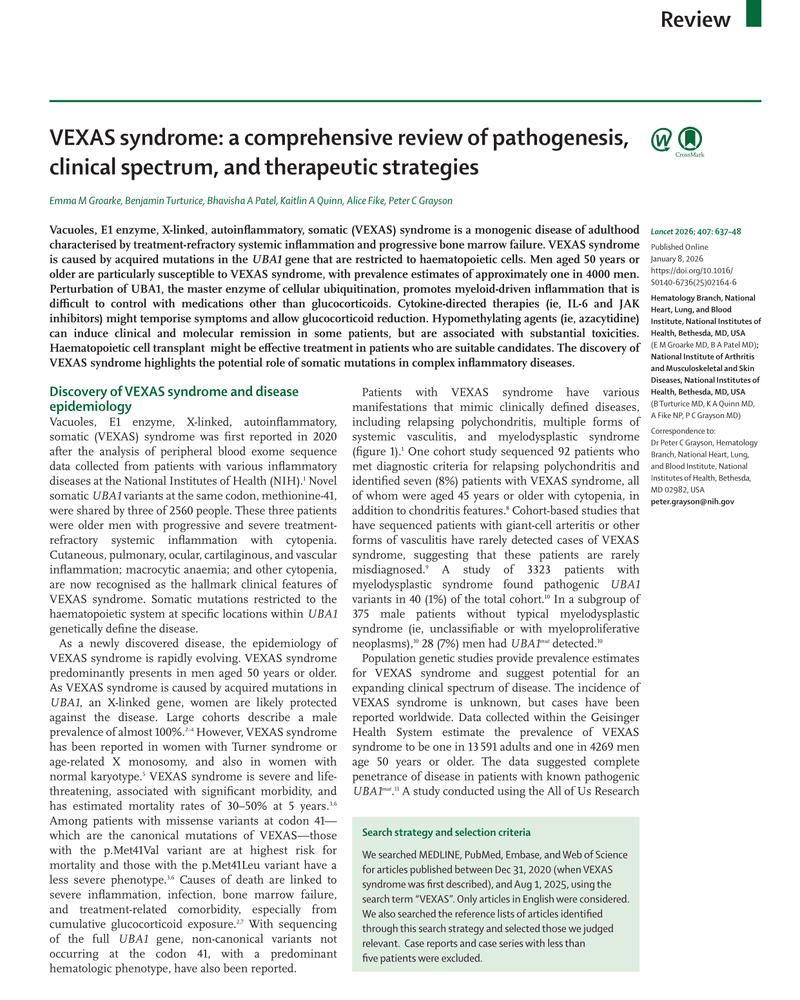
VEXAS SYNDROME: A COMPREHENSIVE REVIEW OF PATHOGENESIS, CLINICAL SPECTRUM, AND THERAPEUTIC STRATEGIES
Same clinical topic · Hematology
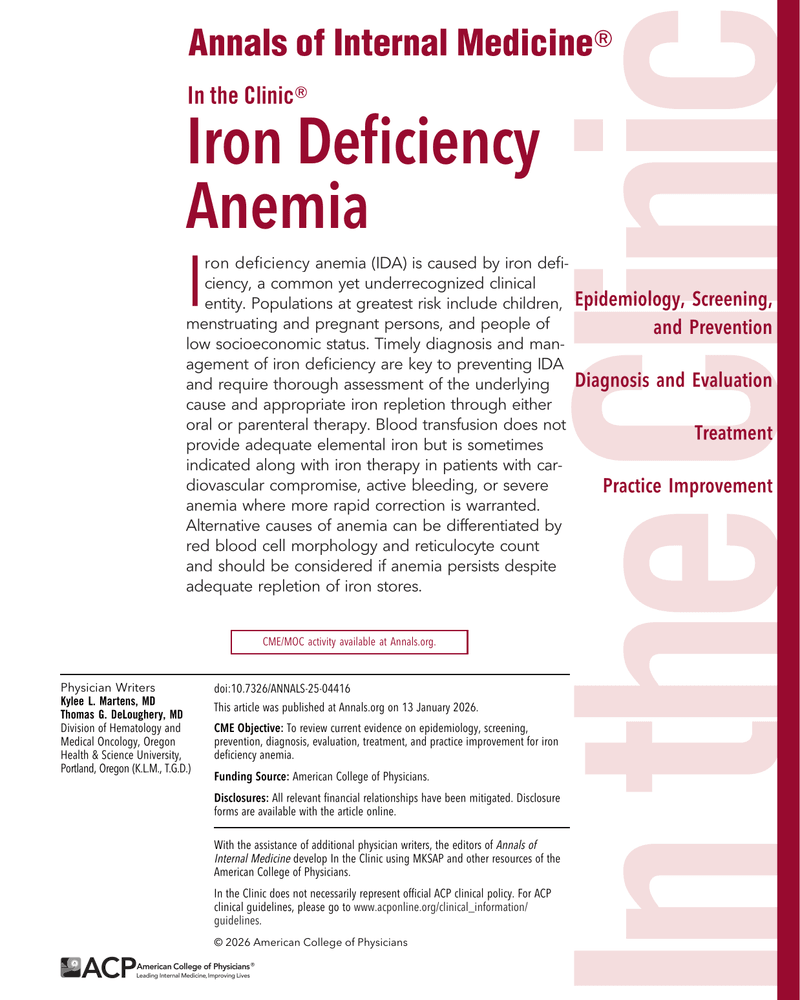
IRON DEFICIENCY
Same clinical topic · Hematology
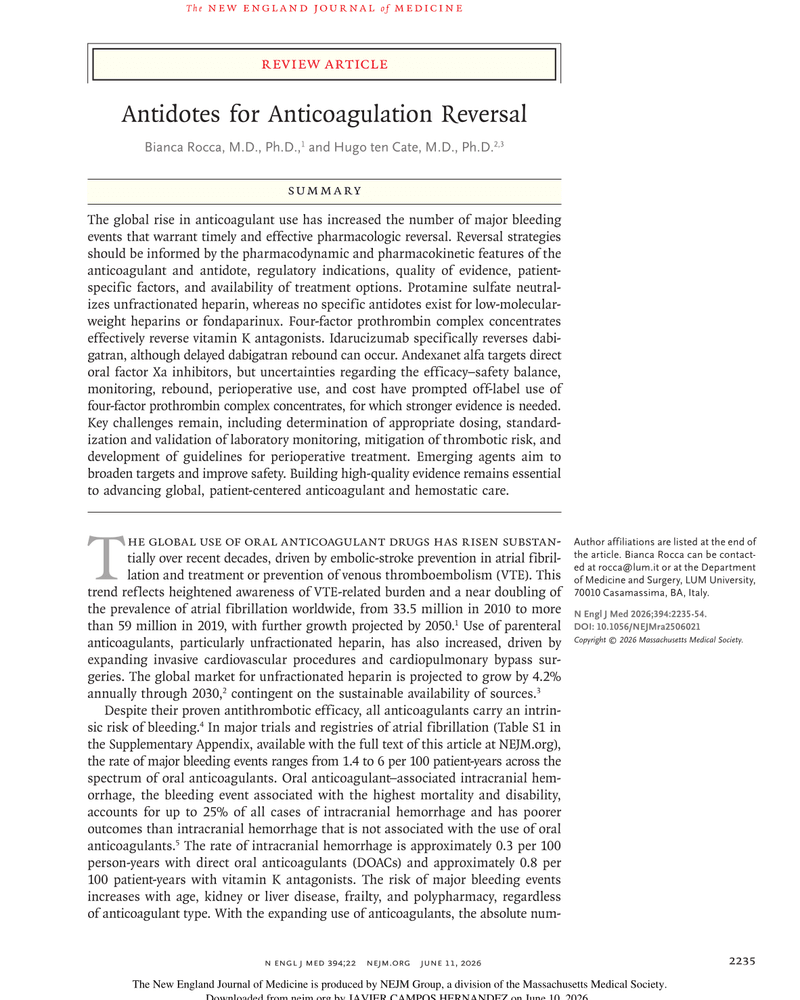
ANTIDOTES FOR ANTICOAGULATION REVERSAL
Same clinical topic · Hematology
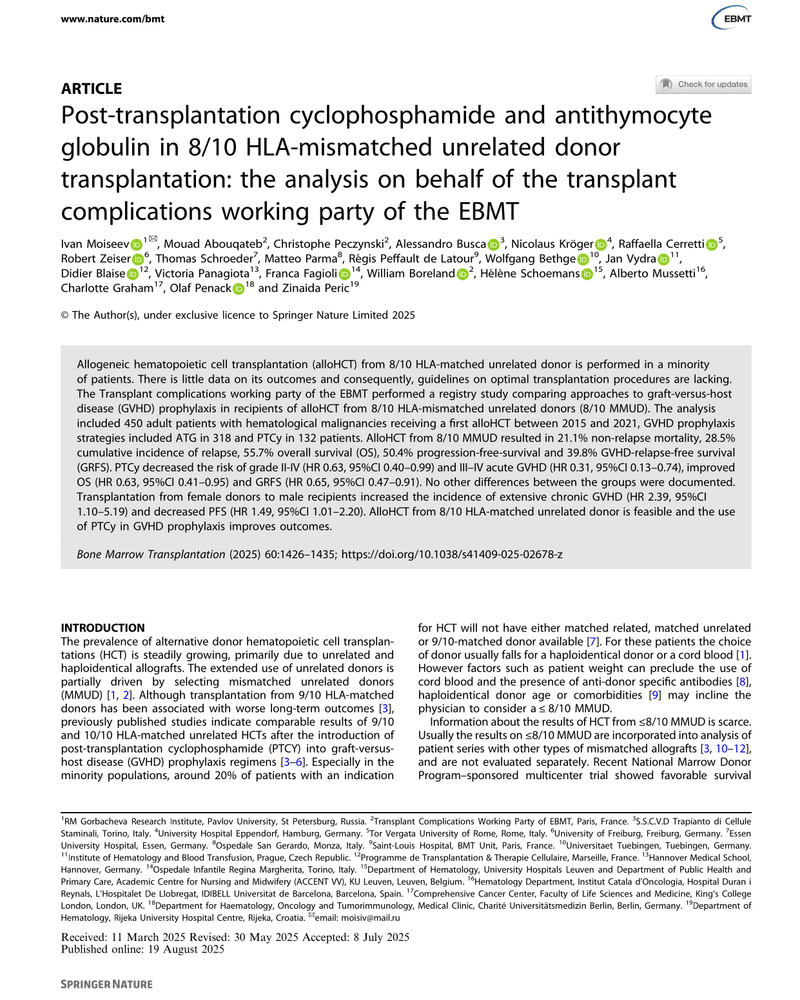
POST-TRANSPLANTATION CYCLOPHOSPHAMIDE AND ANTHYMOCTE GLOBULIN IN 8/10 HLA-MISMATCHED UNRELATED DONOR TRANSPLANTATION
Same clinical topic · Hematology