Please wait while we open this resource.


K

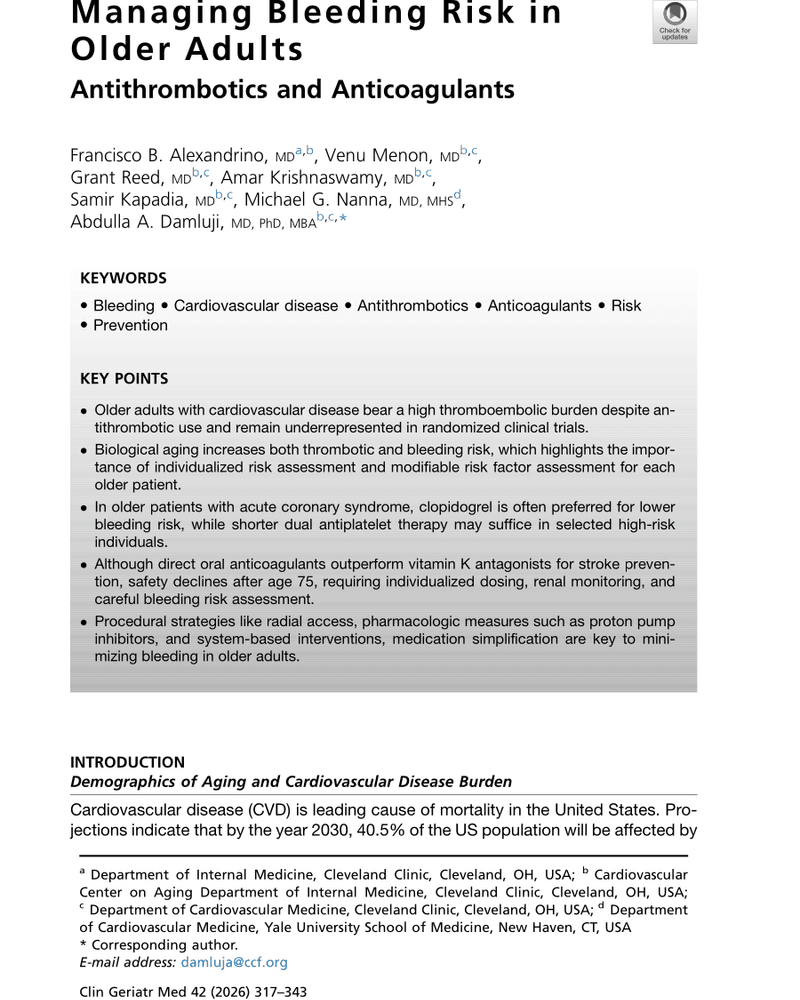
Clinical reviews
MANAGING BLEEDING RISK IN OLDER ADULTS
Francisco B. Alexandrino, MD, Venu Menon, MD, Grant Reed, MD, Amar Krishnaswamy, MD, Samir Kapadia, MD, Michael G. Nanna, MD, MHS, Abdulla A. Damluji, MD, PhD, MBA
PDF27 pages3.3 MB
Cardiovascular disease is a leading cause of mortality among older adults, and this demographic often faces a high thromboembolic burden despite the use of antithrombotics. The document outlines the increased risks of both thrombosis and bleeding associated with biological aging, highlighting the importance of tailored risk assessments. It provides insights into preferred treatment options for older patients, including the use of clopidogrel and direct oral anticoagulants, while also discussing procedural strategies to minimize bleeding risks.
Sign in to open
Ask this resource
Answers use this document only.
Your first question is free.
More like this
Resources from the same specialty and type. Curated links will replace these when added.
Clinical Resources
Documents that extend or complement this resource.
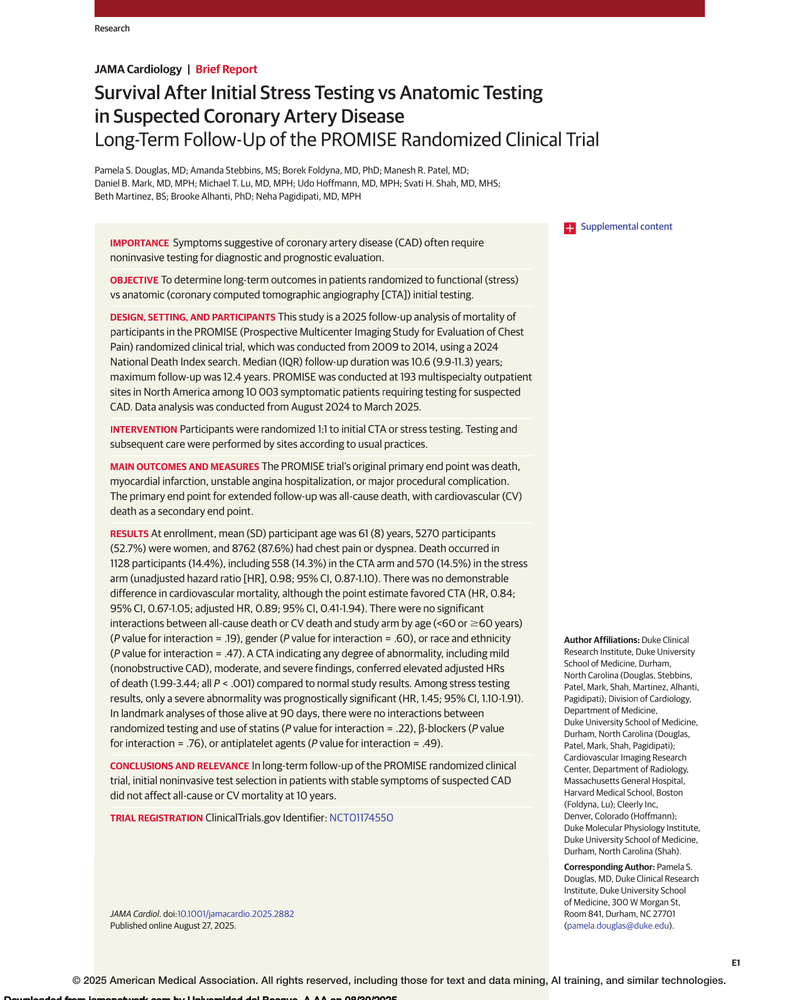
SURVIVAL AFTER INITIAL STRESS TESTING VS ANATOMIC TESTING IN SUSPECTED CORONARY ARTERY DISEASE
Same clinical topic · Cardiology
PRACTICAL CARDIO-ONCOLOGY
Same clinical topic · Cardiology
OXFORD CARDIOLOGY LIBRARY: Hypertension
Same clinical topic · Cardiology
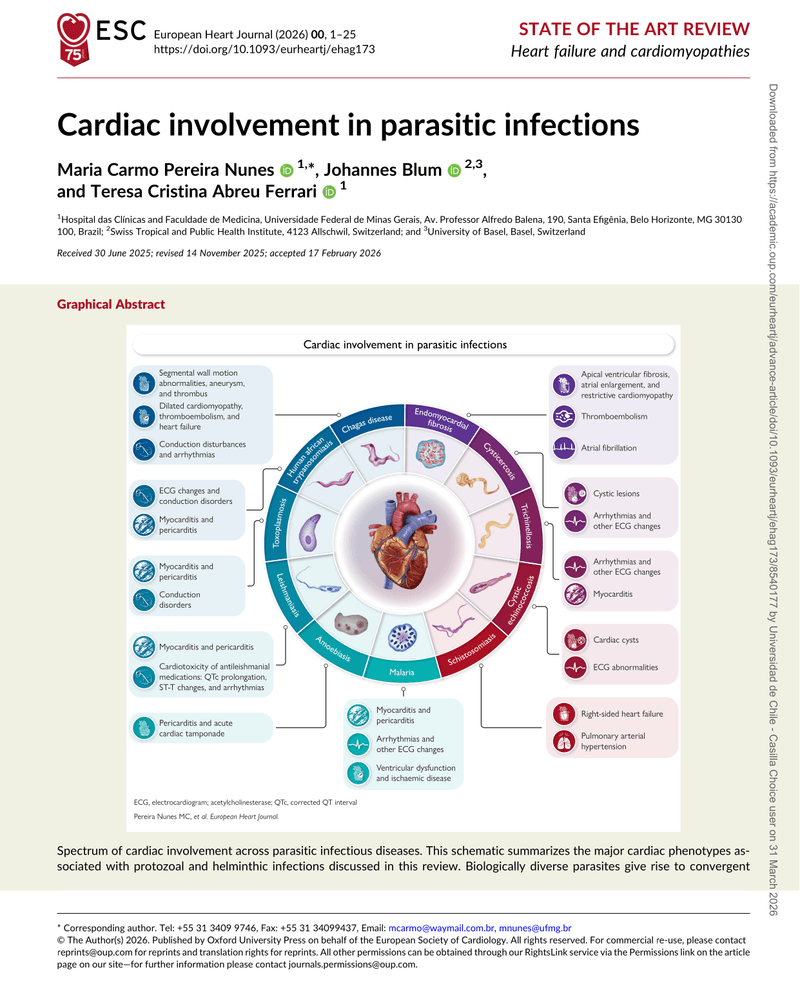
CARDIAC INVOLVEMENT IN PARASITIC INFECTIONS
Same clinical topic · Cardiology
The Athlete’s ECG
Same clinical topic · Cardiology
Antigen carbohydrate 125 as a biomarker in heart failure: a narrative review
Same clinical topic · Cardiology
Current ECG Aspects of Interatrial Block
Same clinical topic · Cardiology
Arrhythmic mitral valve prolapse in 2023: Evidence-based update
Same clinical topic · Cardiology
INTERPRETING THE NORMAL PACEMAKER
Same clinical topic · Cardiology