Please wait while we open this resource.


K


Clinical reviews
Hepatitis E Virus, Second Edition (Springer, 2023)
Institute of Medical Biology, Chinese Academy of Medical Science & Peking Union Medical College
PDF261 pages8.7 MB
This second‑edition volume in the Advances in Experimental Medicine and Biology series presents up‑to‑date research on Hepatitis E virus (HEV). It details advances in cell culture techniques, the construction of infectious cDNA clones, and the role of adaptive mutations in viral replication. The book also reviews pre‑clinical models, including organoid and chimeric mouse systems, and evaluates antiviral agents such as Sofosbuvir, ribavirin, niclosamide, and novel rocaglates. Emerging insights into host‑virus interactions and immune responses in immunocompromised patients are discussed, providing a valuable resource for clinicians and researchers in hepatology and infectious diseases.
Sign in to open
Ask this resource
Answers use this document only.
Your first question is free.
More like this
Resources from the same specialty and type. Curated links will replace these when added.
Clinical Resources
Documents that extend or complement this resource.
AUTOIMMUNE HEPATITIS
Same clinical topic · Hepatology
MOLECULAR MECHANISMS AND PATHOGENESIS OF MASH
Same clinical topic · Hepatology
CIRRHOSIS, PORTAL HYPERTENSION AND HEPATOCELLULAR CARCINOMA: A STAGE-BASED APPROACH
Same clinical topic · Hepatology
NEW APPROACHES TO CHRONIC HEPATITIS B
Same clinical topic · Hepatology
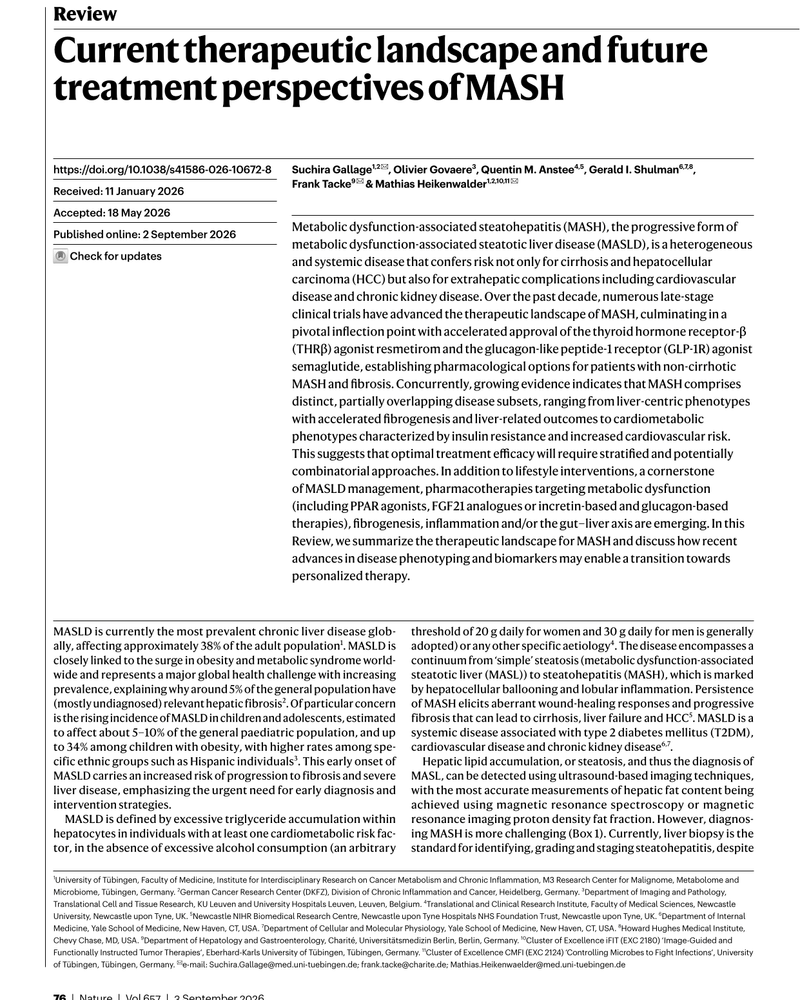
CURRENT THERAPEUTIC LANDSCAPE AND FUTURE TREATMENT PERSPECTIVES OF MASH
Same clinical topic · Hepatology
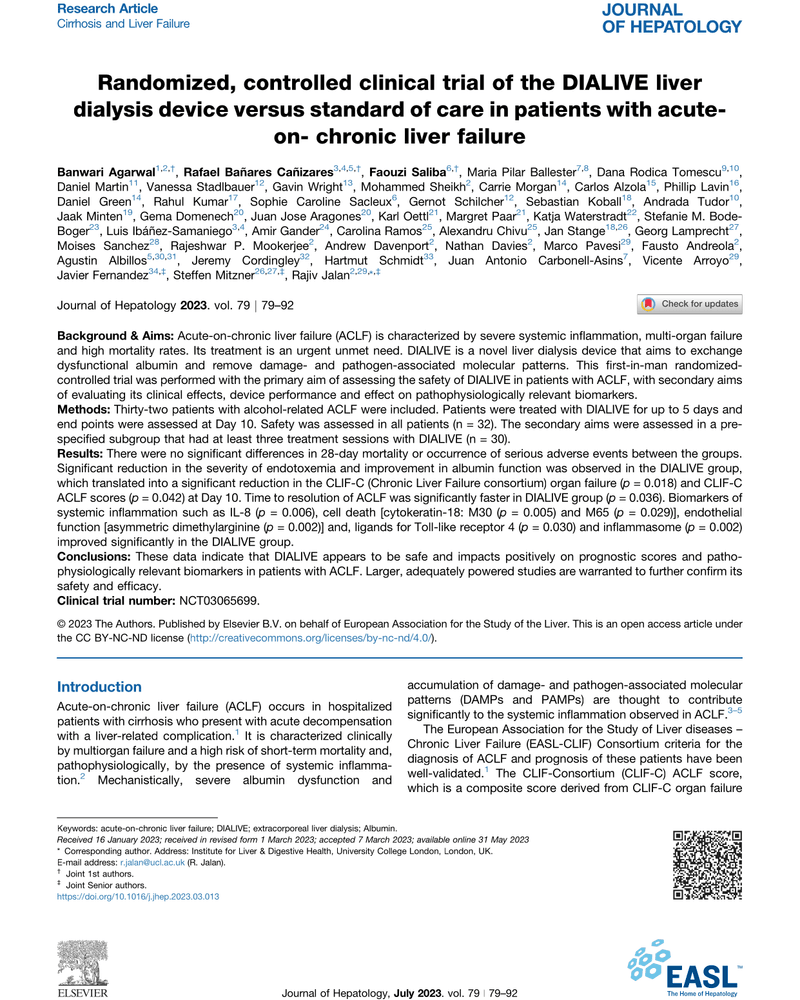
RANDOMIZED, CONTROLLED CLINICAL TRIAL OF THE DIALIVE LIVER DIALYSIS DEVICE VERSUS STANDARD OF CARE IN PATIENTS WITH ACUTE ON-CHRONIC LIVER FAILURE
Same clinical topic · Hepatology
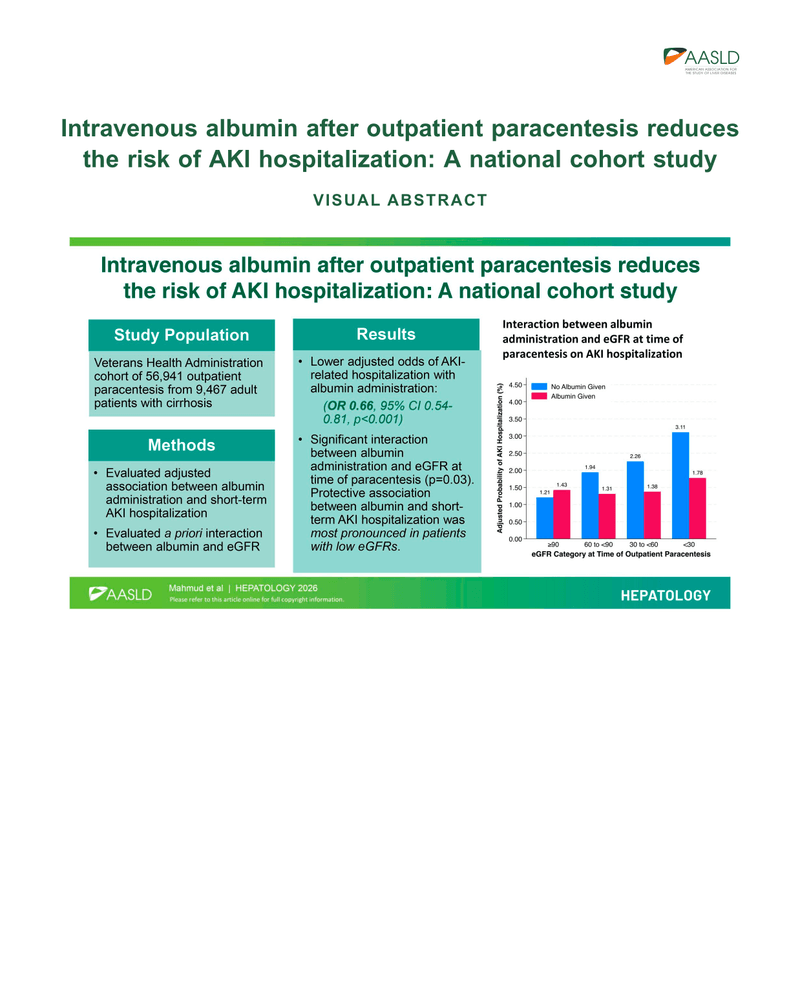
Intravenous albumin after outpatient paracentesis reduces the risk of AKI hospitalization: A national cohort study
Same clinical topic · Hepatology
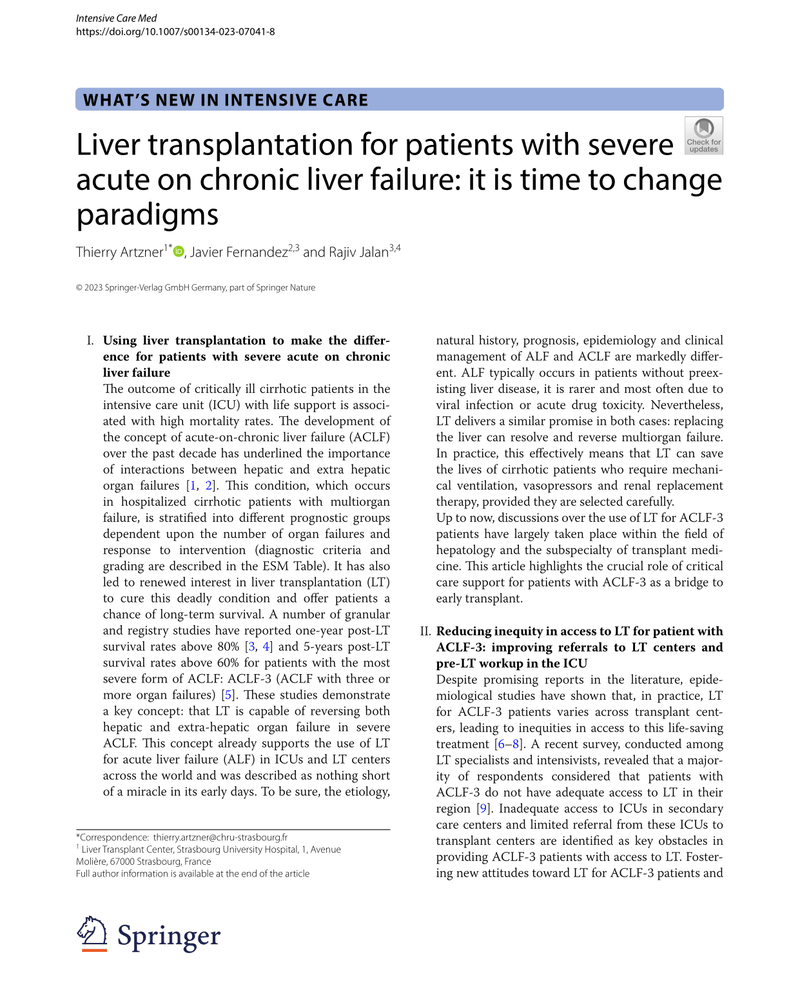
LIVER TRANSPLANTATION FOR PATIENTS WITH SEVERE ACUTE ON CHRONIC LIVER FAILURE: IT IS TIME TO CHANGE PARADIGMS
Same clinical topic · Hepatology
HEPATITIS B
Same clinical topic · Hepatology