Please wait while we open this resource.


K

Clinical reviews
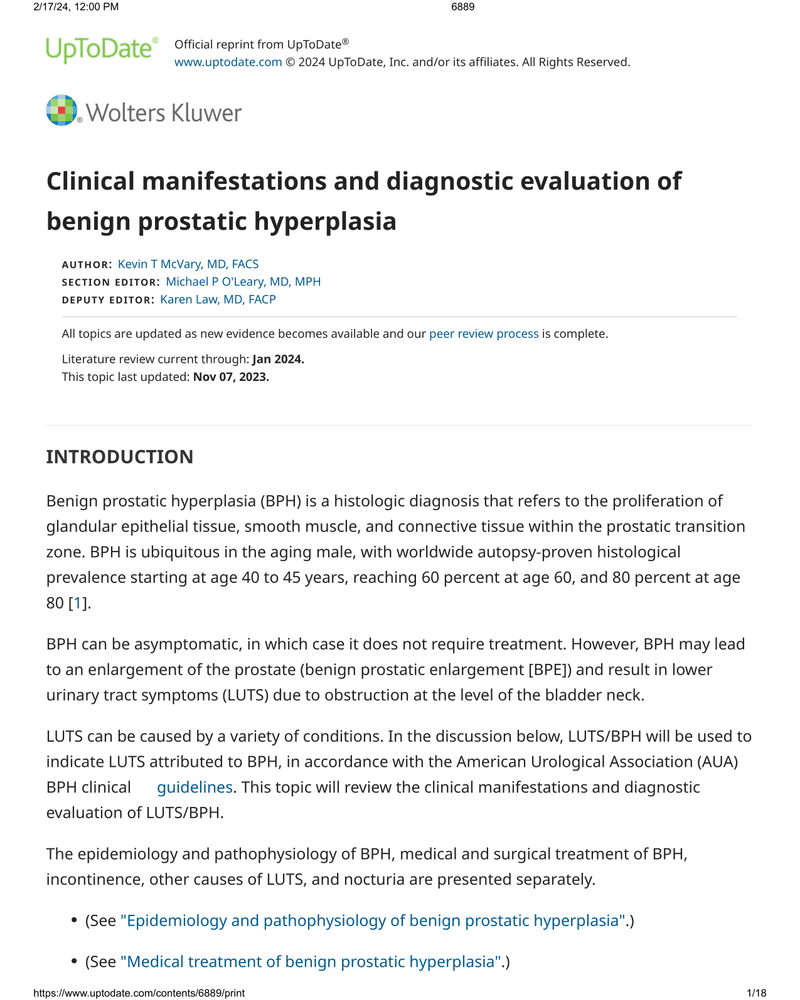
CLINICAL MANIFESTATIONS AND DIAGNOSTIC EVALUATION OF BENIGN PROSTATIC HYPERPLASIA
UpToDate, Inc.
PDF202418 pages396 KB
Benign prostatic hyperplasia (BPH) is characterized by the proliferation of glandular epithelial tissue, smooth muscle, and connective tissue within the prostate. The document discusses the prevalence of BPH, its potential to cause lower urinary tract symptoms (LUTS), and the diagnostic evaluations necessary for proper management. It also highlights the importance of differentiating BPH from other causes of LUTS and outlines the clinical guidelines for assessment and treatment.
Sign in to open
Ask this resource
Answers use this document only.
Your first question is free.
More like this
Resources from the same specialty and type. Curated links will replace these when added.
Clinical Resources
Documents that extend or complement this resource.

EPIDEMIOLOGY AND PATHOPHYSIOLOGY OF BENIGN PROSTATIC HYPERPLASIA
Same clinical topic · Urology
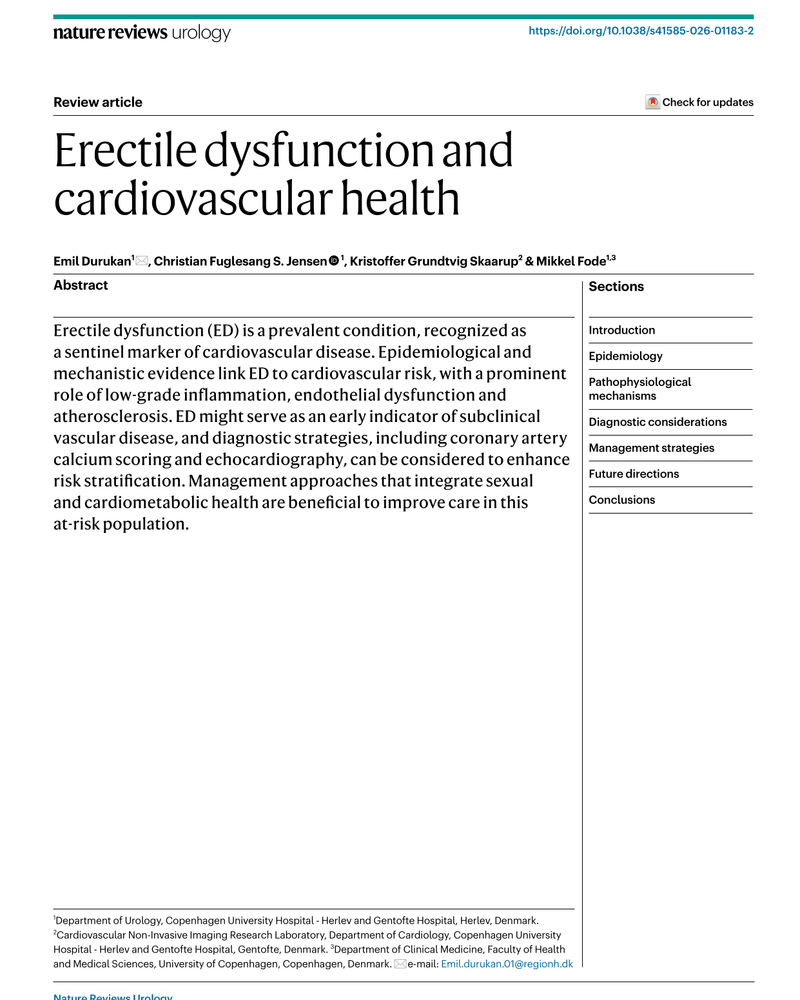
ERECTILE DYSFUNCTION AND CARDIOVASCULAR HEALTH
Same clinical topic · Urology

CLINICAL AND BACTERIOLOGICAL EFFECTIVENESS OF THREE DIFFERENT SHORT-COURSE ANTIBIOTIC REGIMENS AND SINGLE-DOSE FOSFOMYCIN FOR UNCOMPLICATED LOWER URINARY TRACT INFECTIONS IN WOMEN (SCOUT): A PRAGMATIC, MULTICENTRE, OPEN-LABEL, RANDOMISED CLINICAL TRIAL
Same clinical topic · Urology

urethral strictures
Same clinical topic · Urology

BENIGN PROSTATIC HYPERPLASIA
Same specialty · Urology

Imaging In Oncological Urology, 2009
Same specialty · Urology

EAU Guidelines 2023
Same specialty · Urology

Atlas of Male Infertility Microsurgery
Same specialty · Urology

LUNG AND PROSTATE CANCER (2)
Same specialty · Urology